Thursday, May 25, 2006

Some Escher like pictures

Rob Gonsalves has some amazing paintings; they are similar to drawings by MC Escher. Several of them were posted here. This is my favorite:


Written Word


If you are interested in buying them, check here or here. Be warned, they are expensive.


(Hat tip: Cool Digest)


----------
Technorati tags: , ,

Reminder, send in your submissions for the next Carnival of Homeschooling

The Head Mistress, of The Common Room, will be hosting the Carnival of Homeschooling next week.

As always check here for details on how to submit. Entries are always due Monday evenings at 6:00 PM, Pacific Standard Time.


----------
Technorati tags: homeschooling, homeschool, home school, home education, education, ,

Tuesday, May 23, 2006

An article about how public schools ignore parents

I have a Google Alert for 'Diane Ravitch' and today I got a notice leading me to: Hanging Up on Parents?

Parents in New York City are currently in an uproar over a ban against cell phones in public schools. The school administration claims they are worried about kids using cell phones to cheat, take pictures in locker rooms, or arrange drug deals.

The more basic issue is most parents feel like they have no voice in the education of their children. Diane Ravitch says: There is no place to have your voice heard beyond your local school." And I especially liked Council Education Committee Chairman Robert Jackson comment: "There is no true consultation. It’s more, 'We will brief you.’”

The article explores how it is hard for public schools to involve the parents, but that there are many benefits.

I don't see this as a problem which will be fixed any time soon. I think it is systemic to how public schools are run. Almost every bureaucracy seems to take an attitude of it will do what it wants and we should be grateful.


----------
Technorati tags: homeschooling, homeschool, home school, home education, parenting, children, education, ,

Snopes.com info on California 7th grade unit on Islam

FYI: The following URL is the Snopes.com response to the claim in 2001 that, “Seventh graders in California are subjected to an intense three-week course in Islam in which they are required to pray to Allah and memorize Koran verses.” (Click Content Standards to view California's Grade Seven History-Social Science content standards for 2001, which are the same in 2006.)

http://www.snopes.com/religion/islam.htm#across

The following are some quotes from the Snopes.com response:

"As part of their social studies curriculum, Grade 7 pupils throughout California do study ancient Muslim cultures and the impact of Islam on world history,... The intent is to teach the position of this belief system in history, not the religion itself — the dividing line is not always clearly drawn, however, not even in the "standards" handed down by the State of California to its districts and individual schools.

According to California's Grade 7 social studies standard for this particular unit: "Students analyze the geographic, political, economic, religious, and social structures of the civilizations of Islam in the Middle Ages." In and of itself that would be fine, but the breakdown of how that goal is to be achieved opens the door to potential blurring. One item from the 6-point list on how that standard is to be reached is especially troubling: "Trace the origins of Islam and the life and teachings of Muhammad, including Islamic teachings on the connection with Judaism and Christianity."

Many parents would be up in arms if school kids were learning about the life and teachings of Jesus in public school classrooms, even if the information were presented only as background for a unit on the impact of Christianity on world history. That it's a different religion on the hot seat shouldn't matter — it's a "separation of church and state" issue, specifically, that religion must not be taught in schools. Whether the belief system is Islam or Christianity, the core issue doesn't change.

For the most part, the California standards were relatively clear on the intent of the unit (which was to teach about a people central to the course of world history). Ambiguity was certainly present in whether the religion or the people influenced by it would be the subject of all parts of this unit, and it was here that the trip wire was set for unwary educators…

The Grade 7 textbook central to the controversy, Across the Centuries, is a broad-based social studies textbook which examines the impact of a variety of cultures on events as they unfolded over the course of two thousand years. A look at the list of Houghton-Mifflin's "lessons at a glance" for this work shows that it's anything but a "how to" for the Muslim religion …
Does it present Muslims in a positive light and Christians in a negative one? Some argue that it does — by happenstance or otherwise, the information about Islam's place in world history is presented within the context of that belief system's glory days of scholarship and expansion of trade, while the information about Christianity generally only appears against a backdrop of Christians harming their neighbors and attempting to quash science.

The ambiguity of the standard as well as the possible cant of the textbook have contributed to the current controversy. Peggy Green, Superintendent of the Byron Union School District, said in a press statement issued on 11 January 11 2002:
“… In light of the events of this past year, it is imperative that our instruction includes an understanding of and insight into all cultures and a tolerance for the diversity found in the world. As such, public schools do not "indoctrinate" children on various religions, but they do expose them to the belief systems that have impacted the formation of our world.”

The flaw in that statement should by now be evident: If the belief system had been Christianity rather than Islam, there'd have been hell to pay.

… but it must be said if the shoe were on the other foot — had the portions of world history centering on the spread of Christianity been taught in similar manner — the outcry would have been thunderous...

... This controversy shouldn't be about Islam vs. Christianity or "our religion" vs. "their religion," but rather about the appropriateness of any religious teachings in public schools... "

Destructive Family Trends - Part 2

After reading about Russia's high divorce and illegitimacy rates, I did a little research on how these trends effect children.

Some years ago, I saw a study (which I will try to track down) that showed the relationship between family circumstance and the likelihood of being a victim of a sexual assault. Children that lived in a home with a stepfather and a working mother were likely to be a victimized at least once before they turned 18. Step parents and siblings were NOT the most common abusers. It was the lack of parental supervision that most put these children at risk. There is no substitute for parental guidance.

However, it should be noted that children are significantly more likely to die at the hands of a stepfather or mother's boyfriend than a biological father. A Canadian study of "The Cinderella effect" found an immense risk of mistreatment of stepchildren in comparison to those living with two genetic parents.

"The available evidence again indicates a large overrepresentation of stepchildren as victims."

An interesting data point: Biological fathers who are married to their children's biological mother are the least likely to abuse their children.

Please note that there are many extraordinary stepparents. There are wonderful adoptive parents. There are also some very scary biological parents out there. But as a rule, children raised in homes with two married biological parents are the least likely to be victims of abuse. It is a statistical fact. Traditional families are the safest place for children. This does not mean that all children in traditional homes are safe or that children in step families are abused.

What it does mean is that children in step families or other nontraditional families are anywhere from 10-300 percent more likely to be a victim of abuse.


A study of of well-established, “successful”, middle class, registered-marriage U.S. stepfamilies, reported disturbing findings:

Only 53% of the stepfathers and 25% of the stepmothers felt able to say that they had any “parental feeling” (much less “love”) for their stepchildren.


Another study of stepfamilies reported a detrimental effect on eduction.

Also of interest in this context is Ferri’s (1984) finding that both the mothers and stepfathers in British stepfamily homes expressed low aspirations for the children’s education, lower even than those of single mothers of lesser means.


The report concluded with this statement:

"Let us stress again that most stepparents try hard to treat their stepchildren fairly, and extreme negative outcomes, despite being much more prevalent than in genetic-parent homes, are infrequent. That said, however, it is also important to recognize that Cinderella is no fairy tale."

So what does this have to do with homeschooling? For most parents, the decision to homeschool is motivated by a desire to give our children a safe place to grow. We make our homes a safe place by investing time and energy into our marital relationship. Anything that jeopardizes a marriage, jeopardizes the safety and education of children.


----------
Technorati tags: , , , , , , ,

Carnival of Children's Literature: Broken Toe Edition

Melissa of Here in the Bonny Glen has put together this month's Carnival of Children's Literature, this is the Broken Toe Edition. (Chocolate would be appreciated.)


----------
Technorati tags: , , , , ,

Destructive Family Trends - Part 1

The Christian Science Monitor has an interesting article about family trends in Russia:

"Russia's birthrate, falling for decades, has plunged in post-Soviet times, to just 1.17 in 2004 from 2.08 babies per woman in 1990 - far below the 2.4 children required to maintain the population - according to the Federal State Statistics Service. "

"A UN report last year predicted that Russia's population, around 145 million in 2002, could fall by one-third by 2050."

"Experts foretell the grim prospect of a Russia that can no longer man its factories, field a decent hockey team, or defend its borders."

"Official statistics show that almost 8 of every 10 marriages end in divorce, and one-third of children are born out of wedlock. "


The Russian government is unsuccessfully trying to reverse this trend by offering woman money to have a baby and paying them more money to have a second child. With a lack of stable families, few women are interested in child bearing.

This got me to thinking about the circumstances in my life. Our family has an almost endless network of resources through our family connections. We have my husband's parents who are actively involved with our children. Then, there are my husband's brothers and sisters and their families. My brother and sister and their families. Then there are the aunts, uncles and cousins, and second cousins and their families.

I could go on with almost endless examples of family members (or relative of someone married to a family member) who helped us out. We have benefited from help finding a job, buying a car, remodeling a house, researching medical options, planning a trip, and so forth.

Strengthening family relationships is a main reasons we homeschool. I find the push for more institutional care of children frightening. Universal preschool, all day kindergarten, and schools activities that that intrude upon family time, all weaken family ties.

With disintegrating families, the Russian people face a grim future. The Russian experience provides a glimpse of our future if destructive family trends continue.

For more on the effects of changing family trends see Destructive Family Trends - Part 2.
----------
Technorati tags: , , , , , ,

The Carnival of Homeschooling, week 21, is up

Dana, of Principled Discovery, is hosting this week's Carnival of Homeschooling. She invites everyone to join her for a progressive dinner of sampling what bloggers have recetnly written.


----------
Technorati tags: homeschooling, homeschool, home school, home education, parenting, children, education,

Links to interesting postings - 23 May 2006

It looks like I may have to start checking out edspresso on a regular basis. The blog is well layed out, and has interesting posts. And both Spunky and Daryl have participated. Daryl wrote I Homeschool and I Don’t Vote Republican. Spunky wrote Teach to Whose Test?

At Patricia Ann's Pollywog Creek Porch is an account of two men from Saudia Arabia who tried to get on a school bus. It doesn't appear that anyone knows exactly what these two men were trying to do. After 9/11 and the current war on terror, we have heighten concern about unusual events like these. As homeschoolers our children are not being exposed to the dangers in public schools, from bullies, from predator teachers, and from terrorists.


----------
Technorati tags: homeschooling, homeschool, home school, home education, education, ,

The Thinking Mother shares some thoughts from a Raymond Moore Speech

Christine, of The Thinking Mother, posted Thoughts on a Great Raymond Moore Speech About Children, Learning, Education, Homeschooling and Genius Formation. She links to a speech Raymond Moore gave at The Congress of Families II in 1999 in Geneva. She quotes some of the speech and comments on some of his points.

One of the points she focuses on in his speech is how public schools are harmful for the nuturing children who have the potential to become geniuses. The Smithsonian Institution's Journal, Horizon, published a list of three factors that help children become geniuses: 1) warm, responsive parents, 2) isolation from peers, 3) the freedom to explore their own interests. This pretty much nails exactly some of what homeschooling provides.

Christine's post is mostly about the problems with pushing children into an academic setting too early. If you've thought preschool was a good thing, check out her post.


----------
Technorati tags: homeschooling, homeschool, home school, home education, education, , , ,

Cool Astronomy Picture of the Day

It has been awhile since I focused on the daily Astronomy Picture of the Day:

An Intermediate Polar Binary System - shows a White Dwarf pulling in matter for its companion star.


----------
Technorati tags: ,

Monday, May 22, 2006

Barbaro came through surgery

All three of our daughters love horses. I am afraid there is something in the blood. My grandparents had a horse ranch. My sister has five horses. For those of you who don't know, horses can be very expensive. I wish my daughters were interested in something cheaper, like paper making paper dolls.

We started watching the three big horse races that make up the Triple Crown. My daughters were very excited when Barbaro won the Kentucky Derby by over six lengths, two week ago. Two days ago, on Saturday, we sat down to watch the Preakness. The girls were pulling for Barbaro. Just out of the starting gate Barbaro broke a couple bones in his right hind leg. This is life threatening for a horse. It has been very hard on my middle daughter. We've been checking the news every couple hour.

This morning we checked the news and were happy to read that Barbaro came through surgery OK, but it looks like he still has a hard road ahead of him. It was interesting to learn that the horse hospital Barbaro is at is 90 acres.


----------
Technorati tags: , ,

Sunday, May 21, 2006

California high school exit exam - can you pass it?

Can you pass the California high school exit exam?

The California Department of Education released sample questions from the Spring 2001 California high school exit exam. You may view these sample questions by opening the links below.

English-Language Arts Sample Questions (pdf 2 Mb)
Mathematics Sample Questions (pdf 1 Mb)

There are 60 Mathematics Sample Questions. The first 50 problems are on concepts taught in grades 6 and 7. The last 10 problems require some basic algebra. If students only need to get 50% correct to pass, and they get several chances (over 2 or 3 years) to pass, it doesn't seem unreasonable to require students to get a passing grade to get a diploma.

If the judge rules that students get a diploma regardless of how little they know, then perhaps schools should give students who pass the exit exam a certificate documenting that they actually know something.


----------
Technorati tags: , , ,

Saturday, May 20, 2006

"On the map"

For Mother's Day, I was invited with two other moms into the children's Sunday School class to participate in a panel much like the Newly Wed game show on TV. First, the mom's left the room, while the children where asked questions about their moms. Then the mom's were brought back into the room and asked the same questions.

One questions was "Where was your mom born?" When I heard the question, I was pretty confident that my youngest daughter would get the question right. We have a placemat which shows a map of the United States. Twice in the last few weeks, I had pointed out the state where I was born.

When it was my turn to answer, I responded with "Illinois." Then I was shown the answer my five year old had given. "On the map" was her reponse.

It could be worse. One of the other moms who was born and raised in California had her five year old daughter state with great confidence that her mom was born in Sweden.

Carnival of Kid Comedy, week 10, is up

Carrie is hosting this week's Carnival of Kid Comedy at World's Greatest Place to Live INSIDER.

Check it out, and then go over to the Conservative Cat's Carnival page to submit a post about funny things your children have done.


----------
Technorati tags: , , ,

Thursday, May 18, 2006

Classical Education and Susan Wise Bauer

Recently one of my brothers has decided to homeschool. And a good friend of ours has been homeschooling for a couple months. In giving advice to both we mentioned The Well Trained Mind by Susan Wise Bauer and her mother Jessie Wise. As I posted back in December, we really like this book. But we always warn people that even Susan Wise Bauer doesn't follow the book completely. The book is fairly structured. And a reader can come away thinking they'll never be able to do everything in the book.

So it is nice to have the full story. Susan Wise Bauer has written about some of her typical day. In her 1998 typical day one of the things she writes is:

"Daniel crawls into the middle of the table and tips Christopher's pencils over. I pull a chair up to the sink so that he can pour water in and out of cans. He pours water on the floor too, but I put a bathtowel under him and try to ignore it."

It is clear in reading her typical days that plans change on the fly, from the 1999 typical day:

"Christopher's ready to do his Writing Strands assignment. Today he has to do a Good Deed report, so I persuade Ben to get out of bed and bring his brother a little bowl of M&Ms. Christopher is supposed to write an account of this, but everyone now wants to eat M&M, so we have our snack break (way too early). ... Daniel is covered with red M&M goo. That 'Melt in your mouth, not in your hand' slogan is a LIE."

Like most of us her children aren't always sure their mom knows what she is doing, from the 2000 typical day:

"Emily is grousing again. I know she's not ready to get up, so I decide to wait a couple of minutes and see whether she'll go back to sleep. This drives Ben crazy. 'Mom,' he keeps saying, 'the baby is crying!' I get out his Phonics Pathways and tell him to think about his phonics instead. He’s reading me two pages a day, as a review of phonics and spelling rules. He reads the first two lines and then stops. 'Mom,' he says seriously, 'are you sure you know how to take care of a baby?'"

In the 2004 typical day we learn one of those things which wasn't in the book:

"Ben has done one of his eight sentences. I give him M&Ms. Sugar is a vital component of the successful home school."

If you haven't read these typical days, give them a try. They are a lot of fun, and help put The Well Trained Mind in perspective. (Oh, if you know of any more typical days by Susan Wise Bauer, please tell me.)


Update:

The above links for the typical days no longer work.  Here's links which do:


----------
Technorati tags: homeschooling, homeschool, home school, home education, education, , , , ,

Wednesday, May 17, 2006

Don't forget to send in your entry for the next Carnival of Homeschooling

Dana, of Principled Discovery, will be hosting the next Carnival of Homeschooling.

As always check here for details on how to submit. Entries are always due Monday evenings at 6:00 PM, Pacific Standard Time.


----------
Technorati tags: homeschooling, homeschool, home school, home education, education, ,

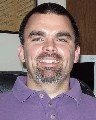
Interview: Brad Miser - Author of "Absolute Beginner's Guide to Home Schooling"

Below is an interview with Brad Miser done via email. I enjoyed his book Absolute Beginner's Guide to Homeschooling. I couldn't find it just now, it looks like we may have loaned it out again.


I hope you enjoy the interview.

-------------------


Brief bio:

Brad Miser wrote the Absolute Beginner's Guide to Homeschooling. Brad has also written a number of technology books, including books about iPods and iTunes, and using Macintosh computers. He is a strong supporter of homeschooling. For more information on Brad check out his web site.


Personal:

Brad, tell us a little about yourself. What did you like to do as a child? What interests do you have now, other than computers and homeschooling? Where have you lived? Where would you like to live?

I was/am pretty much what most people would consider a science/computer geek/nerd. Except for riding motorcycles, which I did as much as I could, and playing football, which I did for several years, my interests were toward the geek end of the spectrum. I loved to read, but mostly read science fiction. The crowd I hung around with liked to play chess at lunch, and we were definitely into Star Trek. I also loved school (the education part--definitely not the social aspects), but was not particularly challenged by it, especially high school, which I sort of cruised through with "A's" even though I took the most advanced classes my school offered.

In college, I majored in Mechanical Engineering and graduated with a BSME. Since then, I've had a number of different jobs starting in the engineering world and moving towards the computer arena, in which I've happily settled.

Now, I have a family that includes my wife and three daughters. My interests are primarily with them. My full time job is as the director of product and customer services for a software development company; I write books as a second job/hobby/passion. My other passion is riding my street motorcycle, which I do as often as I can get it out on the road. I also like to exercise regularly, and am a big movie fan.

I grew up in southern California, went to college in central California (San Luis Obispo), and now live in Indiana (after living in Texas and Alabama). As I often tell people, if I was independently wealthy, I'd live on the coast of northern California because of its incredible beauty. But, the realities of working and raising a family aren't compatible with that area unless you have lots and lots of money. Indiana is a great place to live if one has to deal with the realities of being a working person. It is also a very family- and homeschool-friendly state.


Absolute Beginner's Guide to Home Schooling:

As I mentioned in my review of your book, I think Absolute Beginner's Guide to Home Schooling is a good book for someone new to homeschooling. What did you learn while doing the research for the book?

Thanks for the kind words. The book was great fun to write, and came quite easily because it was an expression of things we'd learned while homeschooling our kids for more than 13 years. I think the thing that struck me the most was the change in attitude towards homeschooling over the years we have done it. Even when we first started (and we were by no means pioneers as many had come before us), homeschooling seemed to be rare and people often had a negative reaction toward it because it was unusual and they had a bad stereotyped image of homeschoolers. Now when I tell people we homeschool, they tend to be either positive or at least know someone else who homeschools, making it seem less odd. I think that is an amazing change in a relatively short period of time.

After writing all the books about programming on the Mac, was it hard to switch to writing about homeschooling?

No, because it is a topic I care about and am very interested in. I was excited about the opportunity to potentially help others make the decision to homeschool--or to at least understand it as a viable option even if they decided to send their kids to public or private school instead. I hoped the book would be a place people could go to get a grasp of the overall process of homeschooling, understand some of the complexities of choosing it, and be able to get started. I also hoped it would take some of the pressure off by including such topics as responding to the inevitable questions people will ask, having a realistic way to evaluate it, and so on.

Do you currently have any plans to write more books on homeschooling?

Not at the moment. I'd like to write more on the topic someday, but technology books are more in focus for me at this point in my career.

My nine year old daughter has expressed an interest in being a writer when she grows up. What advice do you have for her?

As cliche as it sounds, I'd tell her to read as much as possible. It is a rare writer who isn't also an avid reader (and probably only avid readers have any interest in writing anyway). The other suggestion I'd have is to write as much as possible, about any topics she is interested in. That's really the best way to learn to write... by doing it.

I don't think there is a set path for writers to follow. I always had a "knack" for writing, but didn't really focus on doing it until I was in my 30's. And I'm hoping the best is yet to come.


General homeschooling:

How did you get started with homeschooling?

When my first daughter was very young, my wife started homeschooling her without us calling it that. By that I mean we read to her constantly and generally engaged her as much as we could in exploring the world. As she grew, we decided that we wanted to try homeschooling--we had several close family friends who were already homeschooling and we really loved their kids. They seemed a lot more mature than other kids we knew who were not homeschooled so it seemed like the process offered something. We also liked the idea of having the primary relationships with our kids. Over time, we've been very pleased with the results so I think we made a good decision back then. Of course, it hasn't been easy, but good things seldom are.

As an author do you work at home? If so, how involved are you with homeschooling your children?

Actually, my writing career is a second job for me, or more aptly, a part-time passion that I enjoy immensely. I have a full time position as the director of product and customer services for a software company. I write in the mornings before I go to work and on the weekends so that I have time for my family in the evenings after work.
My wife is the driving force in our homeschool. I mostly participate by providing the means for our family to be able to homeschool and offering advice and support where I can.

What is the most fun you've had while homeschooling?

The most fun I have is when my kids surprise me with what they have learned, especially when they express something that I know they would never have learned in a public (or even private) school setting. I also enjoy seeing my kids react to situations in a mature and responsible way.

How will technology affect homeschooling, and education in general, in the coming years?

I think it is already having a profound impact, nowhere more so than for homeschoolers. The Internet makes it possible to participate in high-quality educational opportunities available literally all over the globe in any topics one can imagine. There are many traditional schools, such as colleges, and homeschool organizations that offer individual courses and entire curricula over the Internet. These can be in virtual classroom settings in which students can interact with instructors and with other students or they can be self-paced programs.

This avenue of education offers many benefits, especially for homeschoolers. The technology makes it easy and relatively inexpensive to provide a variety of educational opportunities for kids without handing over the responsibility for their education to an institution. It also takes some of the pressure off homeschool parents because we can easily engage resources that can help with specific topics in which we might not be qualified, especially as kids start toward the high school years.

This technology addresses one area of potential weakness for homeschooling, which can be a lack of variety in educators interacting with students. I believe it is important that students be able to learn from all kinds of people. Using Internet-based training makes this not only possible, but an easy experience to provide.

What do you see as the greatest benefits to homeschooling?

There are three primary benefits from my viewpoint. One is that it helps kids learn that education is not something you do in school, rather it is a way of life and that we are all responsible to continually grow and learn throughout life. Rather than look to an institution to teach them, I hope homeschool teaches kids how to learn for themselves as a way of life. The second primary benefit is that it provides the opportunity for us to really have a relationship with our kids as they grow--I believe this is something that has been lost over the years as the economy and educational systems have become institutionally-focused. Homeschooling enables parents and kids to grow together with the family as the primary focus instead of a "school" being the place where kids spend most of their time and energy. A third benefit is that homeschool helps kids avoid the kind of "herd" based living that is so prevalent now. Instead of looking to an institution or group for guidelines on what is important, kids can learn to look to their parents for this guidance when they are young and develop the ability to make good choices for themselves from an early age.


And again, thank you for letting me interview you.

Thank you for the opportunity!


----------
Technorati tags: homeschooling, homeschool, home school, home education, education, ,

The Carnival of Education, week 67, is up

This week the Carnival of Education is hosted back at The Education Wonks.


----------
Technorati tags: , ,

Book review: Our School by Joanne Jacobs

As I mentioned back in December I attended Joanne Jacobs' kickoff event for her book Our School: The Inspiring Story of Two Teachers, One Big Idea, and the School That Beat the Odds.

It looks like Joanne is finishing up with her book events. The last book event listed is this Saturday in Santa Cruz. Joanne will be speaking speaking at Santa Cruz County Book Fair. (At the Live Oak Community Center, 979 17th Ave., Santa Cruz, 10 am to 4 pm.) If you live in the San Francisco Bay Area you might consider popping over to the beach and spend an hour with Joanne. I greatly enjoyed listening to her talk about the charter school, and education in general.

I bought the book back in December and had Joanne sign it. But I've been distracted, partly by blogging, and only recently got around to reading Our School.

Our School is basically a biography of Downtown College Prep, DCP. This is a charter high school in San Jose, California. Joanne leads us through the birth of the school, founded in 2000. We are introduced to Greg Lippman and Jennifer Andaluz who started the push for DCP. We read of the struggles to get funding, to get a location, and to get students.

Most of the book is about incidents that happened at DCP, or in connection to DCP. It like reading a story. Along the way Joanne slips in information about charter schools and education in general. The book is well written, very engaging, and hard to put down.

Many charter schools are very selective about who they let into the school. Often they only want students who are motivated and doing well in school. There are two elementary charter schools in my neighborhood. There is great competition to get in, so the schools are able to pick the better students.

DCP was created with the intention to help those who were flunking out of school to get back on track for college. Greg and Jennifer were going after those who were no longer in the game. They set themselves a daunting task. In some ways DCP trying to help their students catch up is a Don Quixote mission; it is an almost impossible task. Most of the freshman class was functioning around the fifth grade level. Most of them don't know how to take notes. Most of them don't want to be in school. Most of have trouble reading. A Don Quixote mission might even be easier.

Our School recounts the efforts of the teachers at DCP. One of the nice things about a charter school is they are not bound up with so much bureaucracy. The teachers at DCP would try something, and if it didn't work, they would change quickly. Over time they found ways to help the students dramatically improve their reading. They taught the students how to study. And over time most of the students became engaged and were on track for college. They accomplished these Herculean tasks.

This is a very inspiring and moving book. We get exposed to some of the problems with public education, and we see how a couple people were able to make a great difference. This is a good book to read.


----------
Technorati tags: , , , , , ,

Tuesday, May 16, 2006

Grandfather Education Report

My mother found the Grandfather Education Report by Michael Hodges. There are dozens of pages about the problems with public schools.

I've skimmed through and was surprised by how much data Michael has collected. If you know of anyone who thinks public schools are doing great, you might encourage them to read his report.


----------
Technorati tags: , ,

The Carnival of Homeschooling, week 20, is up

Melissa, of Home Sweet Home, is hosting the Carnival of Homeschooling this week. She uses pictures of animals for organizing the carnival. It is a lot of fun. Go check it out.


----------
Technorati tags: homeschooling, homeschool, home school, home education, parenting, children, education,

Links to interesting postings - 16 May 2006

Spunky, at SpunkHomeSchool, found an interesting WashingtonPost article about students outsourcing tutoring. Students are able to work with teachers from India, who often have a better education than the teachers in the public schools. It is no surprise that the teachers' unions feel threatened.

Dana, at Principled Discovery, has some more thoughts about can television help with education.


----------
Technorati tags: , , , ,